This Month's Morbidly Fascinating Page Presents:
Polydactyly
(exta digits on the hands or feet)
FROM THE MORBID ARCHIVES:
Sleeping Beauty II
Famous Deaths
Dissections
Early Fake Ghost Photos
Bone Church
Black Dahlia
Permanent Halloween Costumes
Dr. Ochi
Flesh-Eating Bacteria
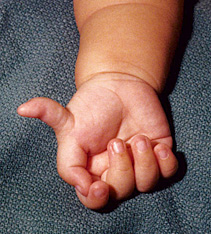
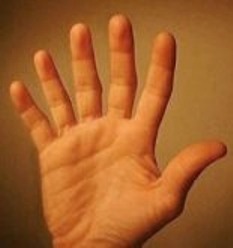
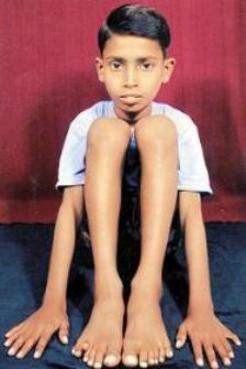
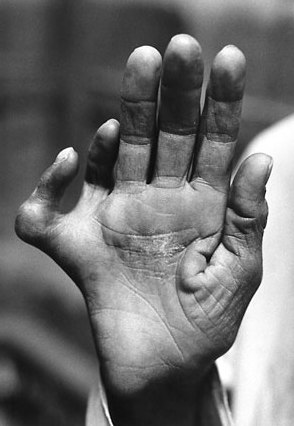
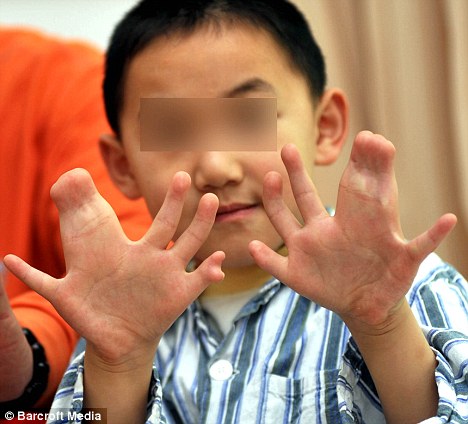
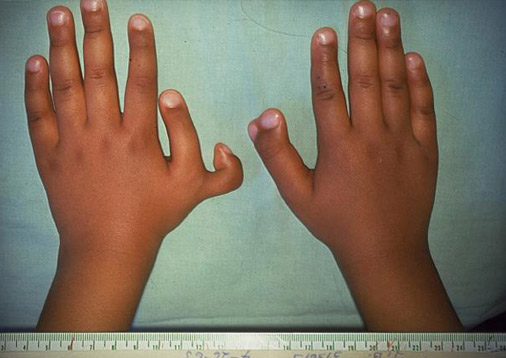
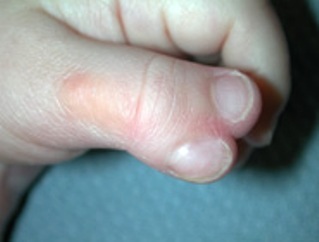
ON THE HANDS
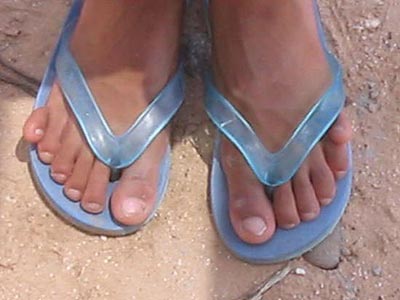
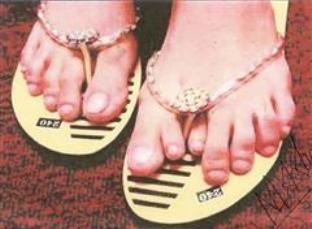
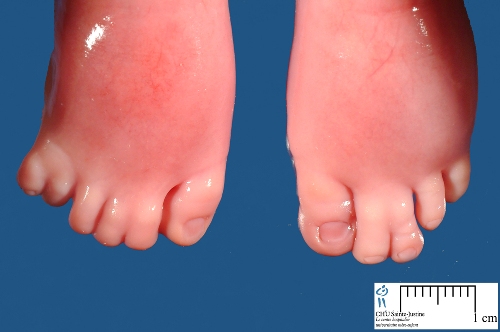
ON THE FEET
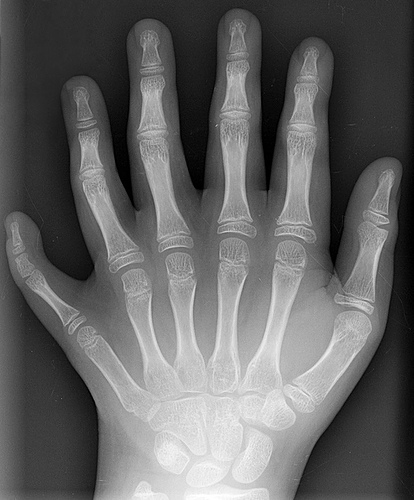
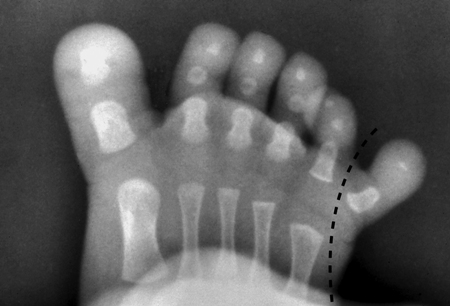
XRAYS
ANIMALS HAVE IT TOO
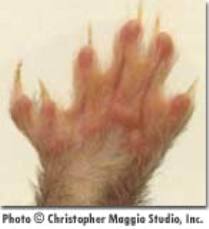
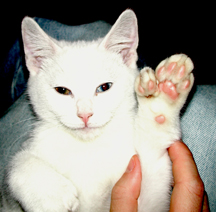
Above: a ferret (left) and a cat (right)
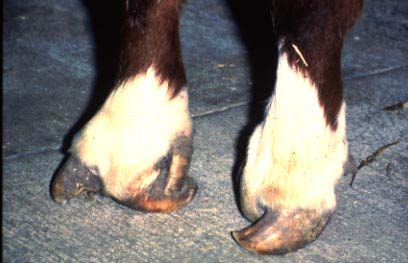
Cow (above)
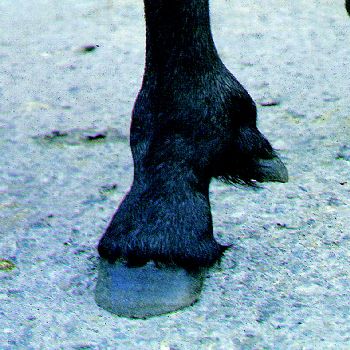
Horse (above), dog (below)

What is Polydactyly?
Polydactyly is a condition in which a person has more than five fingers per hand or five toes per foot. Having an abnormal number of digits (6 or more) can occur on its own, without any other symptoms or disease. Polydactyly may be passed down (inherited) in families. This trait involves only one gene that can cause several variations.
Extra digits may be poorly developed and attached by a small stalk (generally on the little finger side of the hand). Or, they may be well-formed and may even function. Poorly formed digits are usually removed. Typically there is no pain associated with polydactyly.
When the hands and feet are developing in the womb, they start out as flat "paddles" that then normally separate into five digits. Polydactyly occurs when this separation process is excessive, and an extra "segment" is created. This may be caused by a genetic abnormality or by environmental influences.
When the digits are still fused at birth, it is called syndactyly, in which two or more fingers or toes are fused together.
More information can be found HERE and HERE